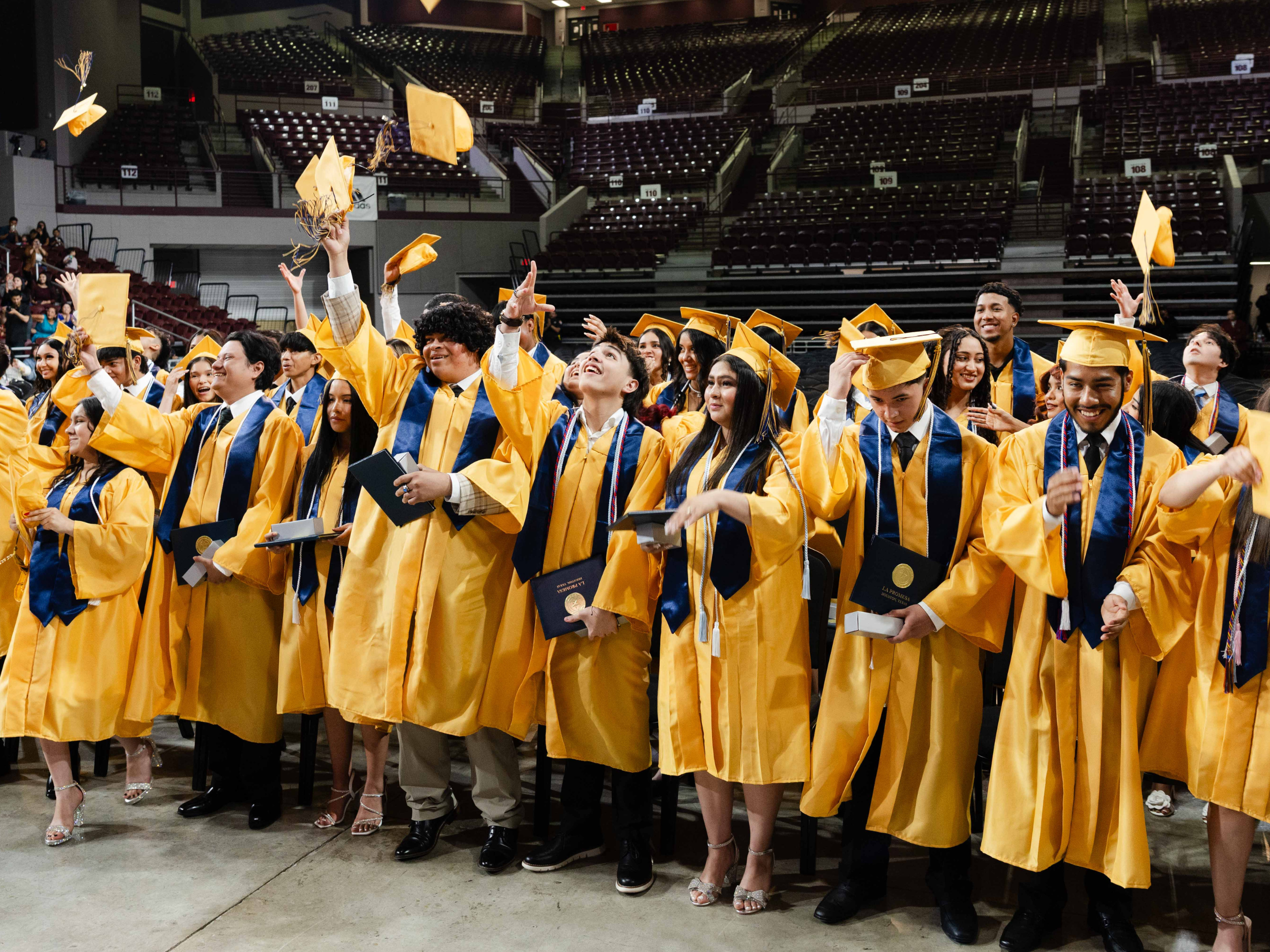



Yu Ming Charter School’s mission is to nurture an inclusive, diverse community of empowered, engaged global citizens. Unlike traditional schools that treat dual-language education as a specialized program for a few students, Yu Ming provides full language immersion for every child. From the earliest grade, students learn in Mandarin with classmates representing 28 different home languages.
Yu Ming opened in 2010 when a group of Oakland parents launched the school as a public charter at a time when bilingual education was banned in California’s district schools. They wanted an option that honored children’s multilingual assets rather than treating them as deficits. From the start, the school was designed to be diverse across race, socioeconomic background, and learning needs. Sue Park, who became CEO in 2015, helped the young school grow and refine its Mandarin immersion model. Demand quickly outpaced seats: applications poured in from three to four families for every kindergarten seat, creating waiting lists across grades and underscoring the hunger for schools that reflect Oakland’s multicultural reality.
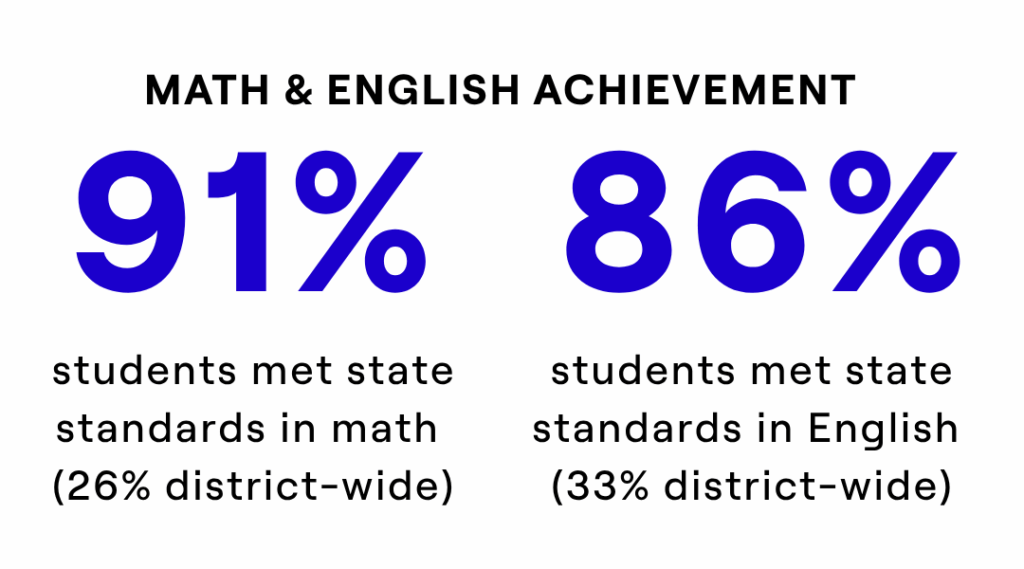
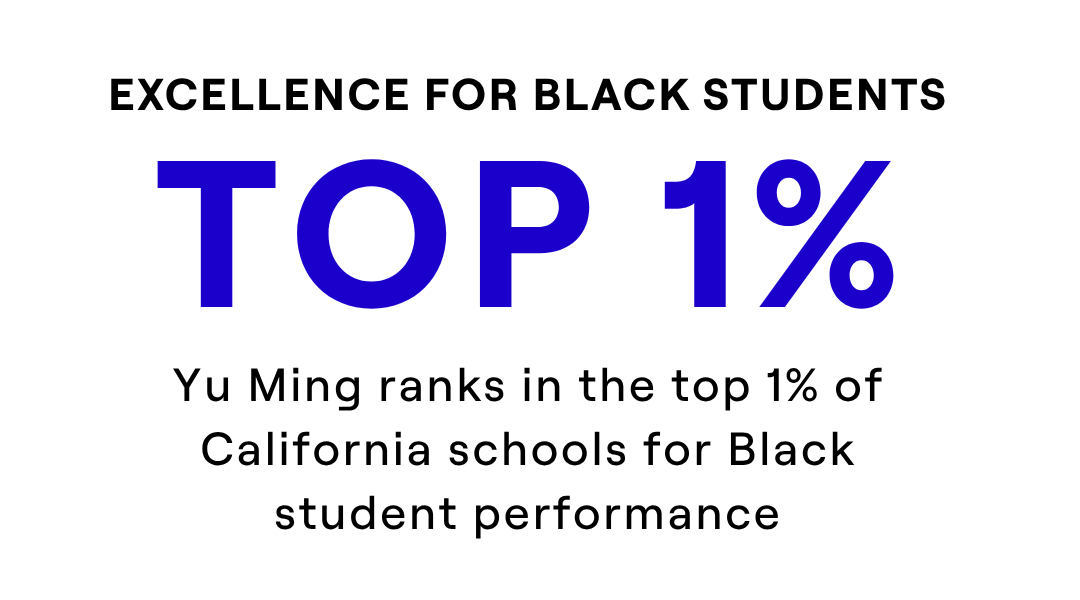
Today, current CEO Stacey Wang builds on the founding vision, guiding Yu Ming’s continued growth and influence. The school now operates four campuses and has earned recognition as a National Blue Ribbon School and a California Distinguished School. It consistently ranks among the top 1% of elementary and middle schools in California for Black and Latino students, English learners, students with disabilities, and economically disadvantaged students.
Yu Ming’s approach rests on four pillars: academic excellence, Mandarin immersion, whole-child education, and a deliberately diverse, inclusive community.
To achieve academic excellence, the school combines data-driven, rigorous instruction with personalized learning that builds student agency. Teachers draw on high-quality curricula and strong professional development to create engaging, student-centered lessons that include guided and independent practice, small-group work, technology, and self-directed learning.
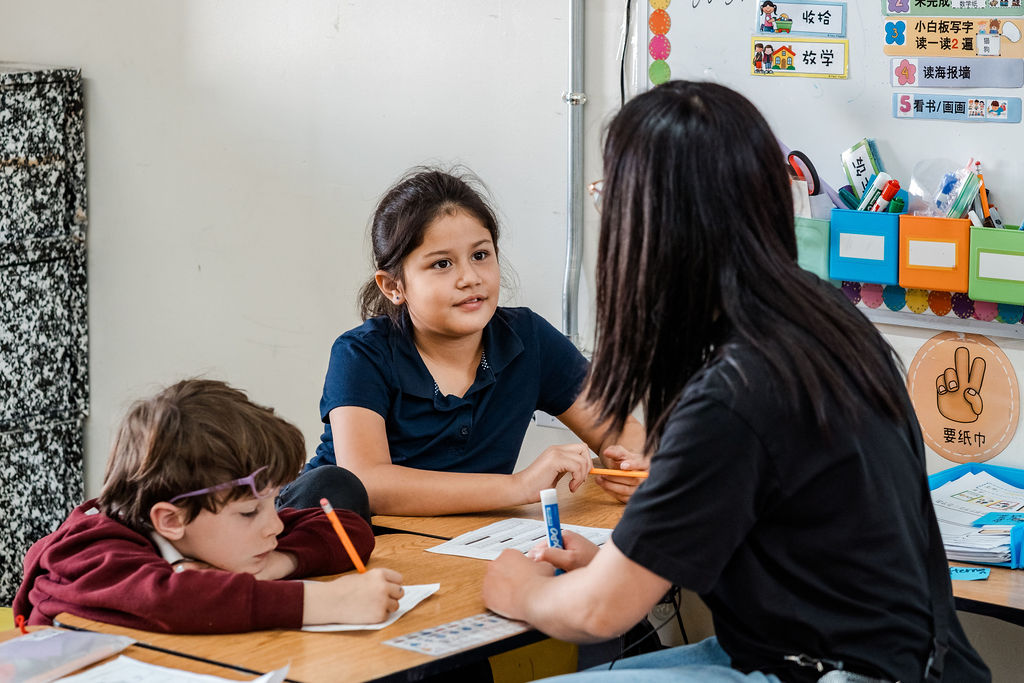
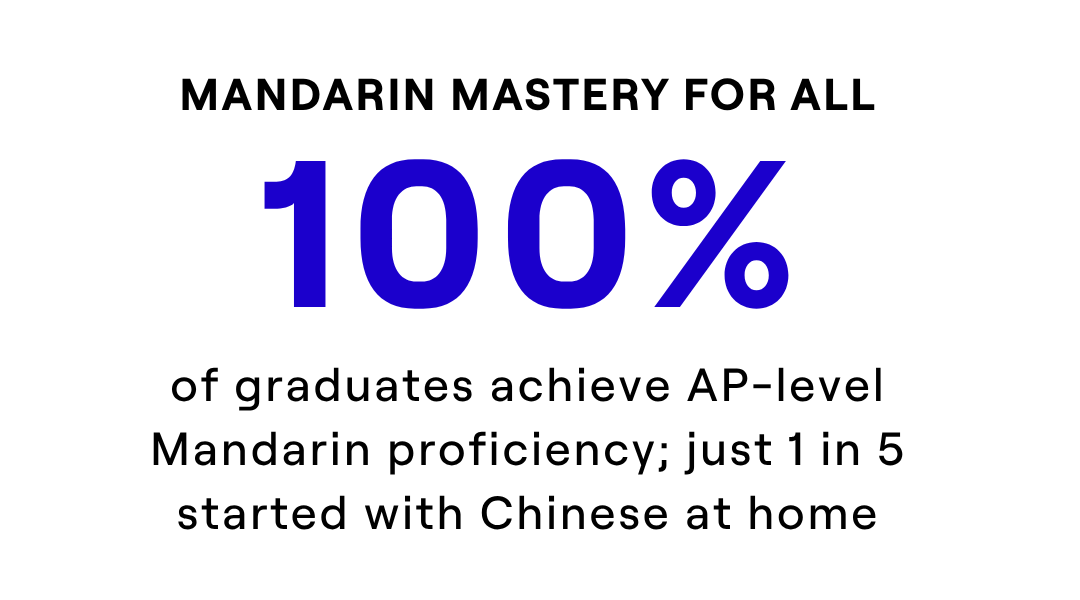
Mandarin immersion begins in the earliest grades, with core subjects — math, science, social studies, physical education, art, and music — taught entirely in Mandarin. The team believes that content learning accelerates language acquisition. As a result, all students finish 8th grade with AP-level Mandarin proficiency, even though only 19% enter with Chinese as a home language.
The school balances rigorous academics with the development of essential mindsets and habits. Practices such as Strong Start and Compass Circles weave social-emotional growth throughout the day. Students develop resilience, self-mastery, and empathy in the early grades and graduate prepared with global awareness, problem-solving skills, and effective communication.
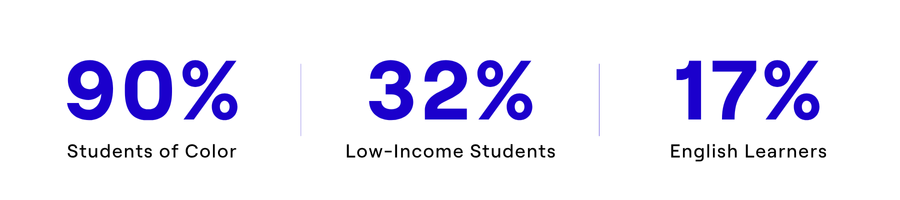
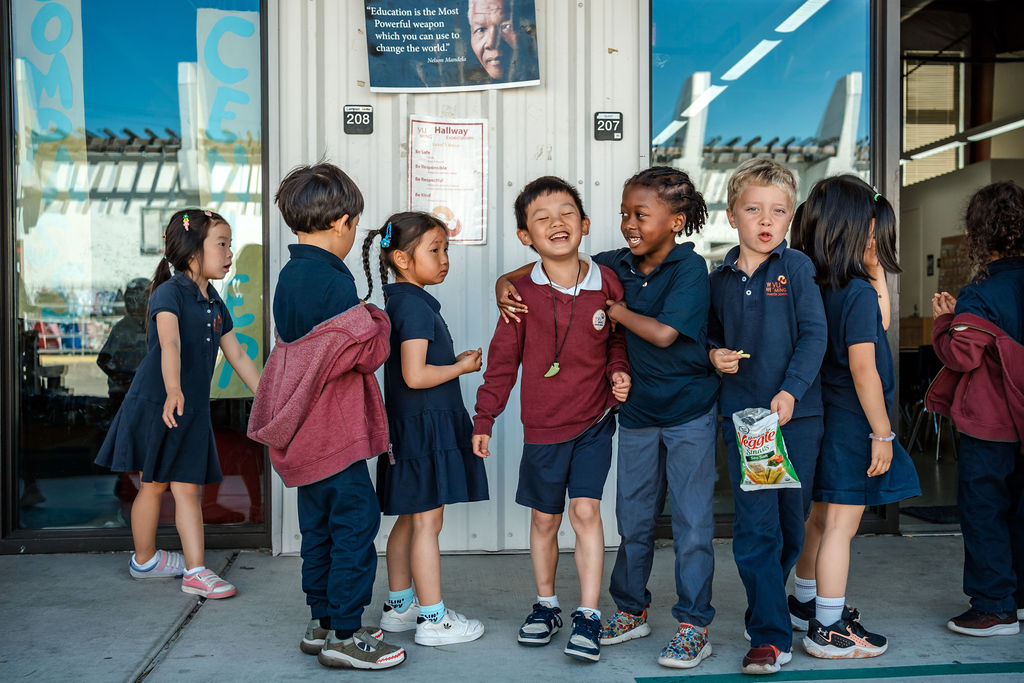
Educators also believe students learn best in a vibrant, inclusive community that brings together families from many backgrounds. Yu Ming intentionally enrolls a student body with no racial majority, drawing families from 37 Bay Area cities and 78 zip codes. Categorical lottery preferences for economically disadvantaged families help ensure that students who might not otherwise have access can benefit from the program.
 |
 |
 |


As Yu Ming expanded to serve more families, it enrolled higher percentages of students with moderate disabilities. Leaders launched an internal review of programs to keep them rigorous and inclusive, while exploring models that better support students with significant disabilities in a dual-language immersion setting. They also revisited expectations and developmental timelines, ensuring goals stayed ambitious yet responsive to each student’s potential.
This ongoing adjustment shows that as schools grow, they must continuously revisit assumptions and practices to meet the needs of an increasingly diverse student body. The results are striking: Yu Ming students with disabilities consistently rank in the top 1% of their subgroup statewide, with a chronic absentee rate under 2% compared with 16% statewide.
Yu Ming’s success in attracting Oakland’s diverse families required outreach strategies that could grow with the school. Even with 2.5 applications for every kindergarten seat, leaders noticed a Bay Area trend of declining Black student enrollment and responded proactively. They expanded affinity group meetings for focus families, increased lottery preferences for families qualifying for free and reduced-price meals, and in 2025 opened transitional kindergarten to provide earlier entry for historically underserved families. These moves illustrate that community engagement is not a one-time design choice but an ongoing relationship-building practice that must evolve as both the school and its community change.
As Yu Ming added campuses and recruited teachers from several countries, leaders discovered that maintaining program quality required more sophisticated professional development than they had anticipated. Varying backgrounds brought different levels of experience with cultural competence and instructional practice. The leadership team participated in intensive training with external experts and implemented comprehensive coaching focused on culture, rigor, and data-driven instruction. Their experience underscores that when schools expand across multiple campuses and broader talent pools, teacher development must address both instructional practice and cultural responsiveness as an ongoing priority.