



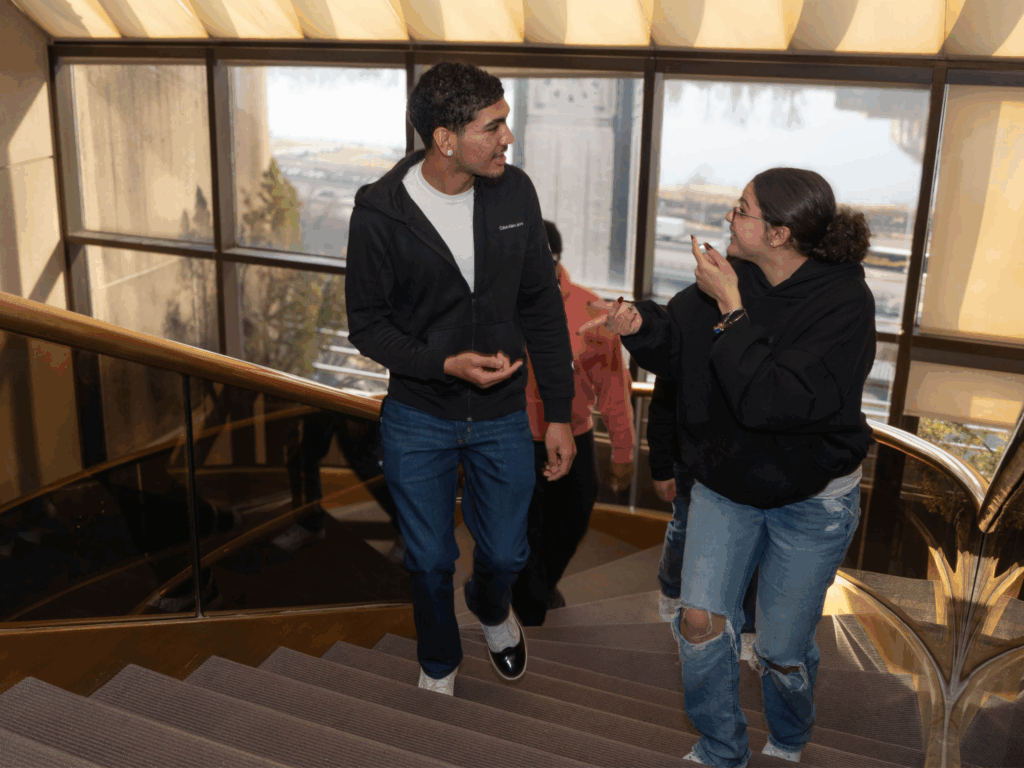
Sixteen-year-old Amelia never imagined she’d be debugging code for a real Springfield tech company before she could drive. Growing up in a household where no one had graduated from college, the idea of earning an associate’s degree while still in high school seemed far-fetched. But here she was, walking between her Spanish literature class and her computer science internship, earning college credits that usually cost thousands of dollars – completely free.
(Amelia is a composite student, based on the real experiences of Discovery Polytech students.)
Discovery Polytech Early College High School’s mission is to create opportunities for Springfield students to become tomorrow’s leaders in science, technology, engineering, the arts, and math (STEAM). The school fosters ingenuity, encourages innovation, and helps students design and pursue individualized goals at their own pace.
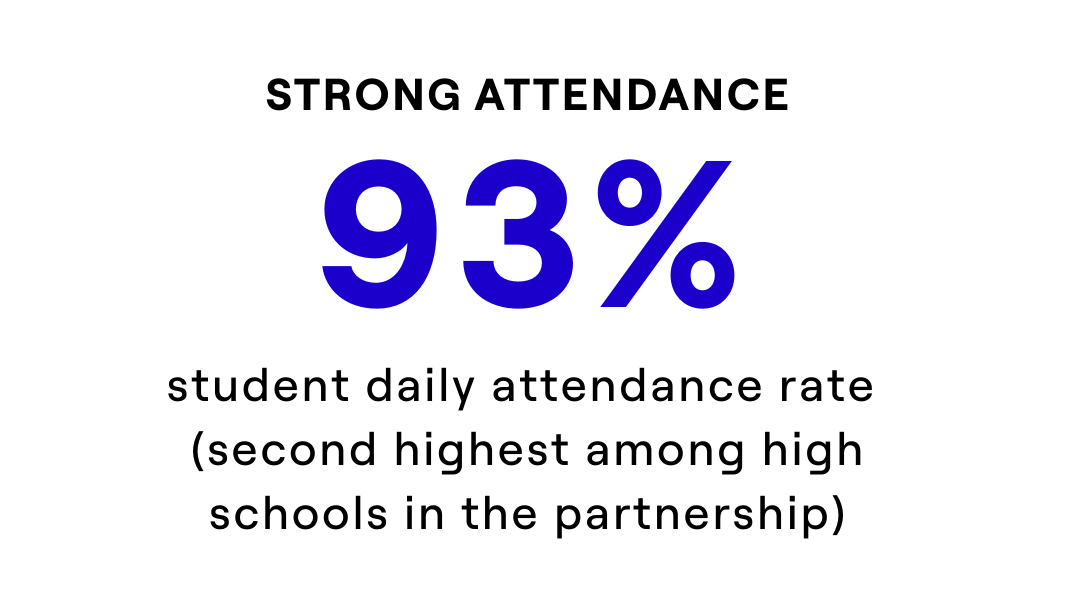
Discovery was designed to disrupt cycles of economic disadvantage in Springfield. It opened in 2021 in response to longstanding opportunity gaps. Only 32% of Springfield high school graduates enroll in college, and, five years later, the average graduate earns just $22,000 annually — less than half the state average.
The Springfield Empowerment Zone Partnership (SEZP) was created to address these challenges in collaboration with the community, and Discovery emerged as one of its boldest initiatives.
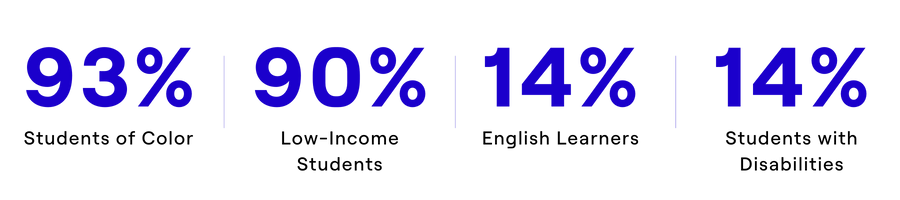
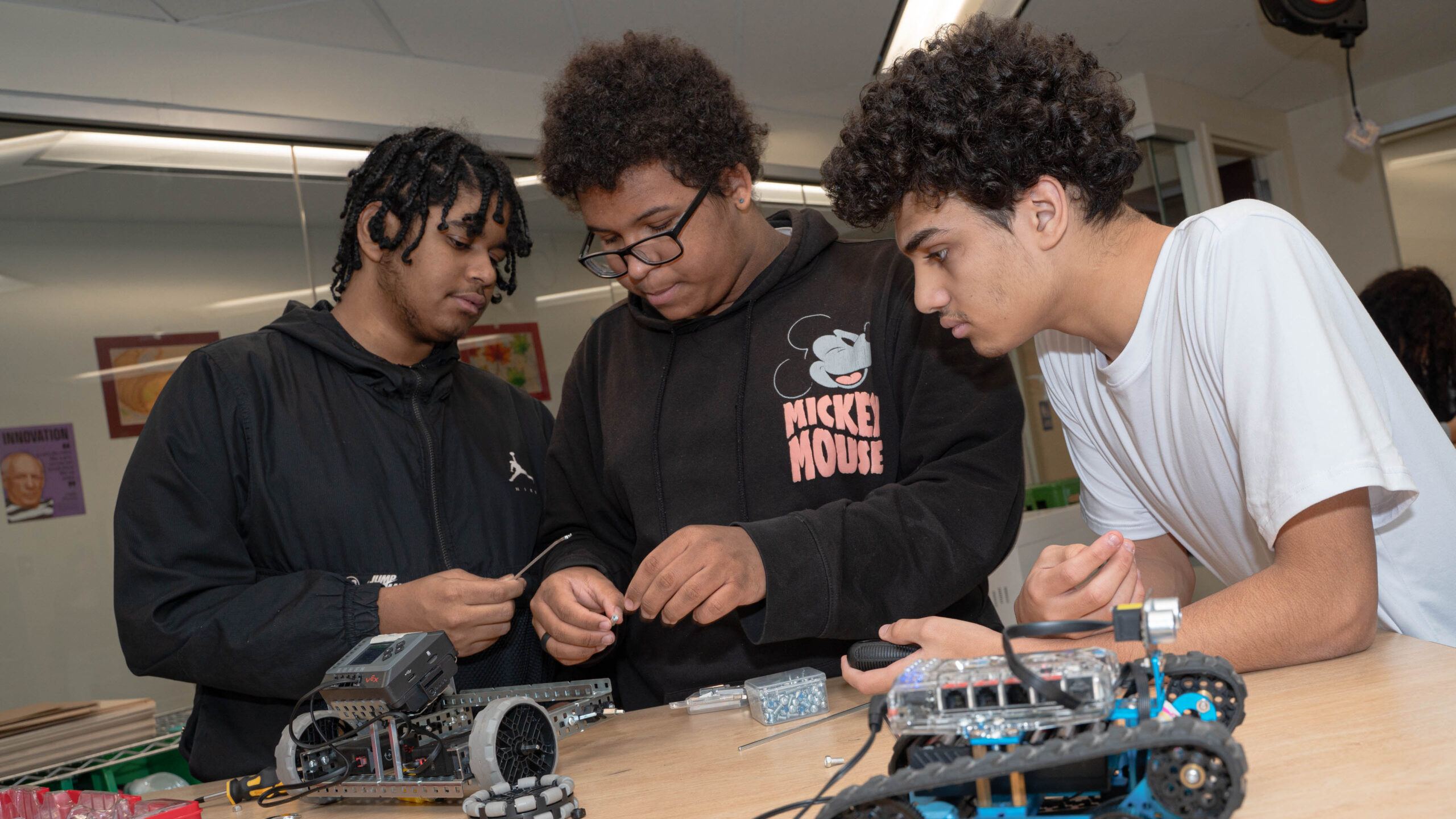
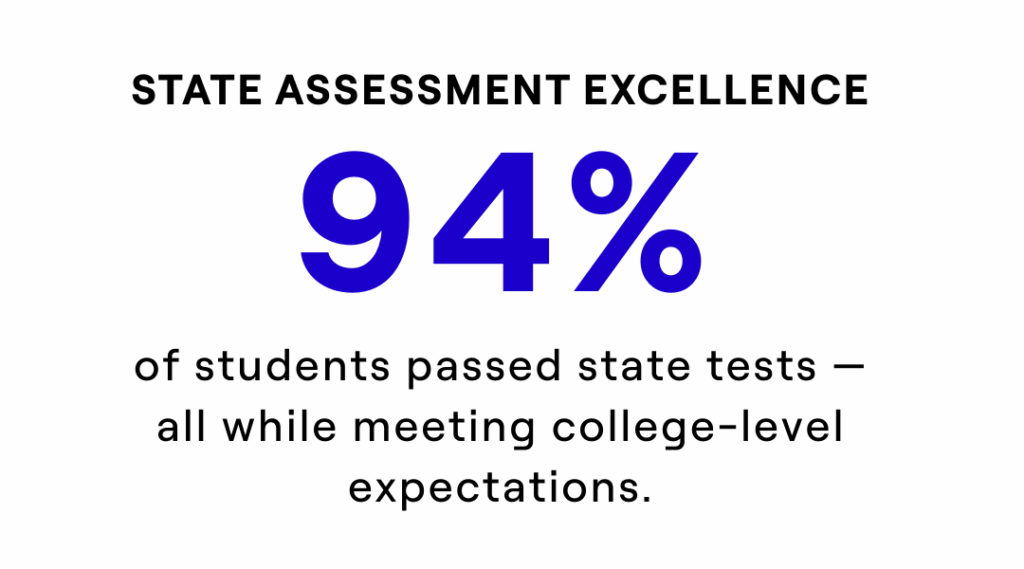
Unlike traditional high schools, Discovery combines rigorous academics with early and sustained exposure to college and careers. Students enroll in college courses beginning freshman year, participate in progressive internships each year, and complete the requirements for a Massachusetts high school diploma.
Through partnerships with local technical, 2-year, and 4-year colleges, students pursue one of ten high-growth career pathways: mechanical engineering, optics and photonics, cybersecurity, computer programming, computer systems engineering, nursing and medicine, speech-language pathology, occupational therapy, hospitality and tourism, and graphic design.
By graduation, students leave with transferable college credits toward bachelor’s degrees in their chosen fields, industry-recognized credentials, and work experience that position them for both higher education and high-wage careers.
 |
 |
 |

Four-Tier Internship System:


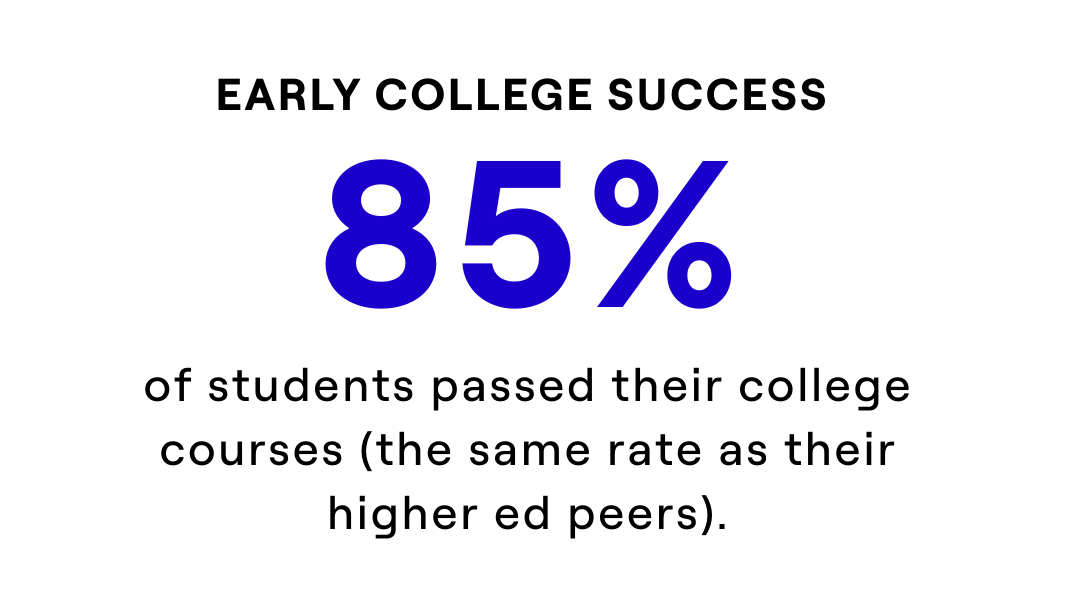
In its first year, Discovery learned that innovation requires solid support structures. Nearly half of students in college courses failed to earn credits because the schedule didn’t allow enough time for academic help and interventions. One of the most critical responses was the creation of Academic Lab, a daily 80-minute support block that quickly became central to the school’s success. The team also introduced an advisor system with small caseloads, bilingual educator pairings with emergent bilingual students, an “audit” option for college courses that protected transcripts, and systematic data tracking to guide interventions. Within two years, 85% of students passed college courses, with 82% of credits transferable, outperforming the average community college student.
As Discovery expanded from one to five higher education institutions and multiple community and industry partners, the team learned that strong alignment doesn’t always guarantee smooth collaboration. Each partner brought unique policies, faculty standards, student supports, and professional cultures. Effectively managing this ecosystem required a nuanced approach. Partnerships cannot be managed with a one-size-fits all strategy — they demand active relationship management, constant adaptation, and a focus on continuous improvement to keep the ecosystem working for students.
As a lab school, Discovery documents its practices and develops training experiences so other schools can learn from its work. Codifying innovations also proved to be one of the school’s most valuable tools internally. By capturing and training around what worked, the team gained a clearer understanding of the drivers of quality in their own model. This allowed them to maintain high performance as they grew and to support three other SEZP high schools in adopting wall-to-wall early-college approaches informed by Discovery’s innovations.