
You might not recognize the names of the headliners at Summit 2012. No, I’m not referring to Howard Fuller, Roland Fryer, or even Rahm Emanuel. I’m talking about Donaldo, Juan, Paris, and Javon: students whose stories were featured throughout the day in video, photographs, and the written word.
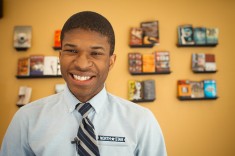 These students, like nearly 15 million other US children, are growing up in households with incomes at or below the federal poverty level. Often, their childhood experiences include exposure to gang and gun violence and lack of basic material necessities. The odds are stacked against them: only 9% will graduate from college, the strongest predictor of workforce success in our information-based, global economy.
Yet, these students’ futures are breaking with the statistics. Javon is off to college in the fall, and the others are on the same path. How? Each of them is receiving the quality of education that all parents wish for their children—one that prepares them with the skills and confidence they need to succeed in college and beyond.
Welcoming Summit participants, our CEO Ted Mitchell asked the audience to focus on the vital lesson these students can teach us: a great education can reverse the cycle of poverty. The successes of our best schools and best teachers show us that. However, he continued, “nobody’s satisfied with the scale of our impact.”
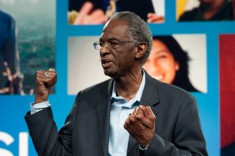 This sobering self-examination would continue throughout the day, starting with the opening session led by Howard Fuller. Known for his fiery frankness, Fuller did not disappoint. Decrying the urge to rest on past laurels, he urged the audience to remain laser focused on work that would improve the lives of children. “We should tell no lies, and claim no easy victories as we move forward to help our kids,” he told the 900+ crowd. This advice (and admonishment) would reappear in conversations in each of the more than 20 sessions at Summit. Fuller urged the crowd to seek out new strategies that would radically change the education system. “We have to stay focused, relentless, and not be scared. If you’re not scared, you can make change in America.”
Self-described “super-nerd” Professor Roland Fryer, who heads the Education Innovation Laboratory at Harvard University, reminded the largely pro-charter audience that charter schools have received a mixed report card from recent national studies. Many charter schools should be closed, he stated. Fryer’s Apollo 20 initiative is trying to translate the achievements of the most successful charters to traditional district schools. Later, DC Public Schools Chancellor Kaya Henderson argued that the distinction between charter and traditional district school was far less important than successful and failing school.
Addressing another area where the education reform movement has paid little attention was a poignant conversation around innovating to serve students with special needs, including English language learners. Featured entrepreneurs included Daniel Yoo from Goalbook, which helps connect educators connected to a single special needs student; Teddy Rice from Ellevation, which is developing tools for ELL teachers; and Jack Lynch from Presence Learning, which uses technology to connect speech therapists to students around the country. This group discussed the achievement gaps faced by special needs students and how important innovations can better serve them.
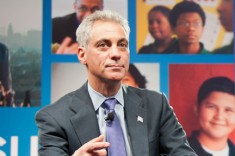 Throughout the day, Summit speakers refused to avoid the difficult conversations about the reach of our movement and the impact of poverty on student success. Each conversation was a recommitment to meet Ted’s challenge to focus all our efforts on the children we serve. Chicago Mayor Rahm Emanuel, speaking during the closing session, summarized this sentiment: “I’m not for education reform; I’m for results.”
Summit 2012 was only the beginning for many of the challenging conversations we must continue in order to truly transform our public education system into one that serves up an excellent education for every student. The day inspired and re-energized attendees to keep students like Juan and Paris central to every decision we make, to honor the people doing the hard work that benefits students—especially those from our toughest communities—and to refuse to accept poverty as an immutable life sentence for 15 million of our nation’s children.